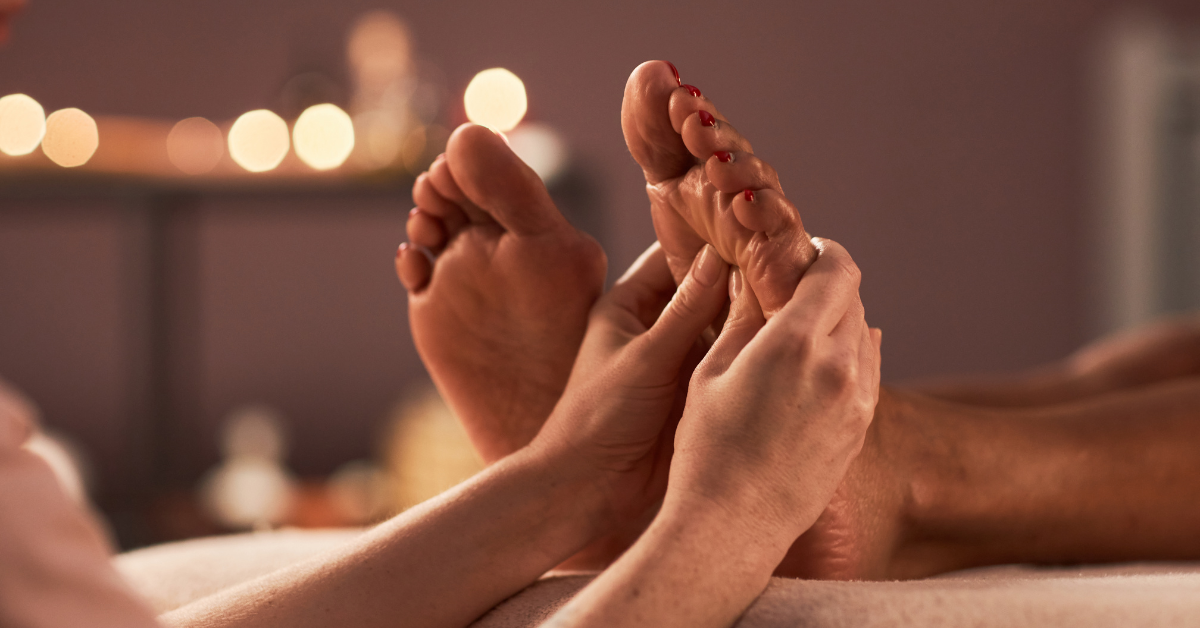
Pain—whether it’s a continuous headache, tenacious back pain, or day-long fatigue—can impair your daily routine more than you realise. While medicines may offer brief comfort, holistic therapies like foot reflex massage are gaining popularity for their natural, long-lasting effects. Reflexology is founded on the belief that certain points on your foot are connected to organs, nerves, and systems throughout your body. You can improve circulation, lessen pain, and reduce tension by stimulating these pressure points, which triggers the body’s natural healing reaction.
In this blog, we go deep into how foot reflex massage works for pain treatment and investigate the optimum pressure areas for headaches, back pain, and fatigue—three of the most prevalent concerns people experience every day.
How Foot Reflex Massage Helps with Pain Relief
Your feet have about 7,000 nerve endings, each related to different sections of the body. A neural response that transmits signals throughout the nervous system is triggered when pressure is applied to specific zones. This method helps:
- Improve blood circulation
- Reduce inflammation
- Release muscle tension
- Calm the nervous system
- Boost energy flow
Unlike typical massage, reflexology focuses on restoring balance throughout the body. Regular foot reflex massage treatments can help manage chronic diseases as well as everyday discomfort caused by stress, incorrect posture, long working hours, and lifestyle choices.
Best Pressure Points for Headache Relief
Stress, dehydration, eye strain, and tension in the shoulders and neck can all result in headaches. Reflexology treats these factors by stimulating spots that calm nerves and enhance blood flow.
1. Big Toe Tip (Brain & Head Reflex Point)
The tip of your big toe indicates your skull and brain. Applying continuous pressure for 2–3 minutes helps in reducing migraine intensity.
- Easing tension headaches
- Reducing mental tension
Use your thumb to press the centre of the big toe while inhaling deeply.
2. Base of Big Toe (Neck Reflex Point)
This is the area to concentrate on if your headaches are caused by stiffness or stress in your neck. By massaging the base of the big toe, pressure that travels up to the head is relieved and neck muscles are relaxed.
3. Upper Sole (Sinus Reflex Point)
For sinus-related headaches, squeeze the upper section of the sole slightly below the toes. This clears congestion, improves breathing, and reduces sinus pressure.
Do slow circular motions for optimal results.
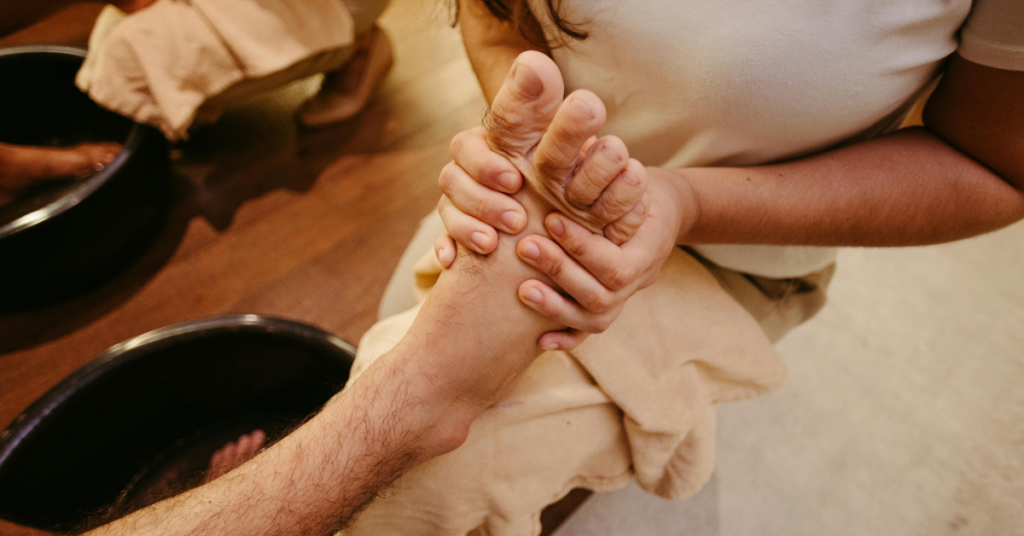
Best Pressure Points for Back Pain Relief
Back pain is one of the primary causes of physical discomfort, especially among people who sit for long hours or have bad posture. Reflexology works by reducing tension in similar locations of the spine.
1. The spine reflex zone, or inside edge of the foot
The entire inner edge of your foot—from heel to big toe—represents your spine. Apply mild pressure along this line to relieve:
- Pain in the lower back
- stiffness in the upper back
- Discomfort associated with sciatica
Cover the whole length with an upward movement of your thumb.
2. Lower Back Reflex Point (Heel Area)
Lower back pain frequently stems from extended sitting or weak muscles. Pressing the heel helps reduce lower lumbar stress and enhances spinal alignment.
Spend at least 3–4 minutes here if your discomfort is chronic.
3. Middle Arch (Shoulder Reflex Point & Upper Back)
Located in the centre of your foot, this point corresponds to the thoracic spine and shoulders. Massaging this zone decreases muscular knots and improves posture.
Best Pressure Points for Fatigue Relief
Fatigue is more than tiredness—it’s an energy imbalance caused by stress, sleep issues, dehydration, and hormonal fluctuations. A good foot reflex massage helps restore natural energy flow.
1. Centre of the Foot (Solar Plexus Point)
One of the most powerful reflexology points, the solar plexus controls stress responses. Apply gentle pressure in the centre of the foot to promote relaxation and increase energy levels.
This is especially helpful if fatigue is stress-induced.
2. Ball of the Foot (Chest & Lung Reflex Point)
If you feel breathless, low on energy, or mentally drained, stimulate the ball of your foot. This aid enhances oxygen flow and boosts vigour.
3. Inner Arch Kidney Reflex Point
Kidneys play a critical function in energy balancing. Detoxification is aided by massaging the kidney point, which also lessens fatigue brought on by toxin accumulation.
How to Perform Foot Reflex Massage at Home
To attempt foot reflex massage, you don’t need any special equipment. It only takes a basic routine, a quiet area, and clean feet. Here’s how to do it successfully:
Step 1: Let Your Feet Unwind
Soak them in warm water with Epsom salt to soften tissues and promote circulation.
Step 2: Use Lotion or Oil
For easy, fluid movement, use almond or coconut oil.
Step 3: Begin with Warm-Up Motions
To stimulate nerve endings, gently massage the entire foot.
Step 4: Pay Attention to Specific Pressure Points
For two to three minutes, press each reflex point with your thumb or knuckles.
Step 5: Conclude with Light Stretches
To relieve any residual tension, flex and rotate your foot.
For noticeable effects, repeat this process three to four times a week.
Who Should Avoid Foot Reflex Massage?
Although reflexology is typically safe, individuals with specific illnesses should speak with a physician before doing it:
- Severe circulatory problems
- Recent foot injuries
- Diabetes-related nerve damage
- Pregnancy (certain points may produce contractions)
- severe foot infections or inflammation
Always conduct the massage softly and stop if you experience sharp discomfort.
Final Thoughts
Whether you’re battling with chronic headaches, stiff back muscles, or day-long exhaustion, foot reflex massage is a natural, effective way to help your body’s healing process. By stimulating specific pressure points, you may relax your entire system, enhance blood flow, and enjoy true pain relief—right from the comfort of your home. With constant practice, reflexology can help restore balance, reduce stress, and increase general well-being.